

Commentary
Mohanad Hage Ali
{
  "authors": [
    "Mohanad Hage Ali"
  ],
  "type": "commentary",
  "blog": "Diwan",
  "centerAffiliationAll": "",
  "centers": [
    "Carnegie Endowment for International Peace",
    "Malcolm H. Kerr Carnegie Middle East Center"
  ],
  "englishNewsletterAll": "",
  "nonEnglishNewsletterAll": "",
  "primaryCenter": "Malcolm H. Kerr Carnegie Middle East Center",
  "programAffiliation": "",
  "regions": [
    "Israel",
    "Lebanon",
    "Levant",
    "United States"
  ]
}
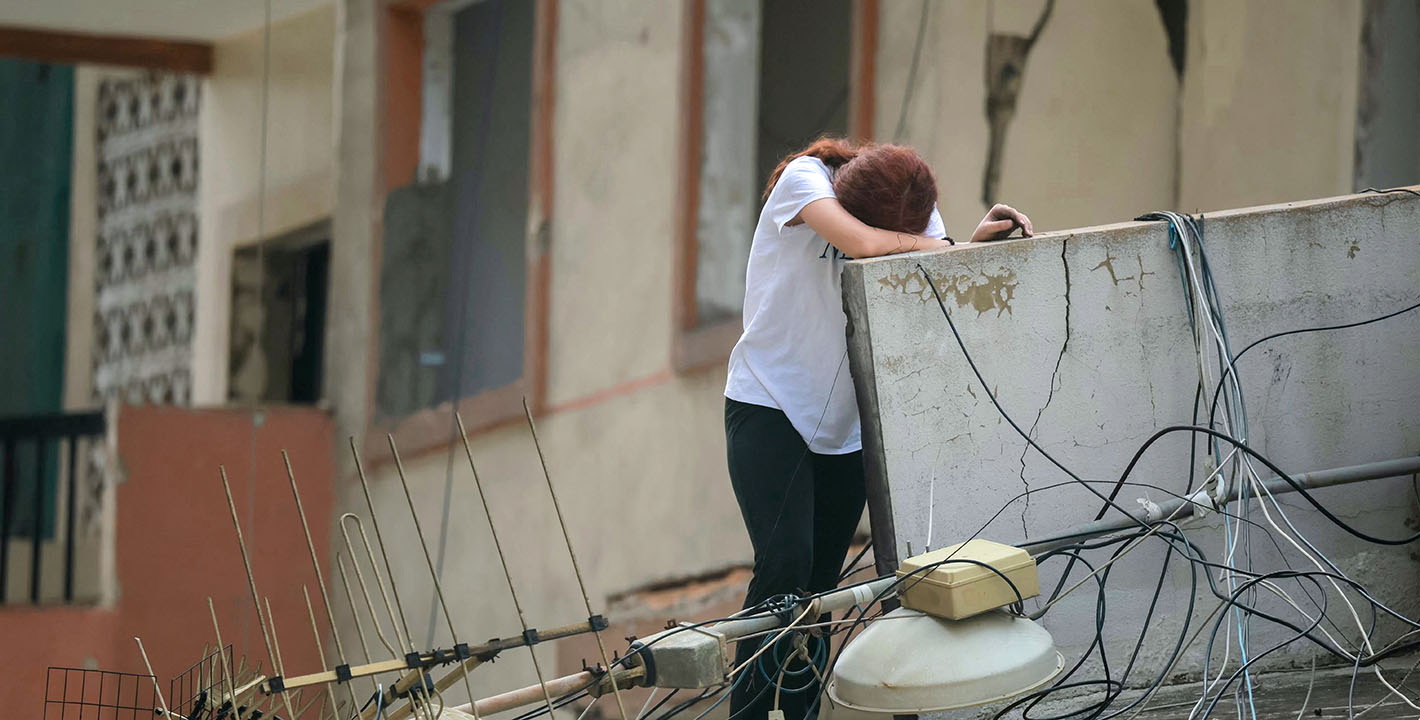
Source: Getty
Unless Beirut lowers expectations, any setbacks will end up bolstering Hezbollah’s narrative.
As the Lebanese government and the United States work to extend and consolidate the current ten-day ceasefire in Lebanon, with a second round of Lebanese-Israeli negotiations planned for April 23 in Washington at the ambassadorial level, both Hezbollah and Israel are operating as though the war between them is far from over.
Hezbollah is urging displaced inhabitants of the south to hold off on returning home until the region is more secure, while Israel continues to raze entire villages in the south. The paradox is that the two sides have opposing strategic readings of the situation and are pursuing contrary objectives, yet their actions are converging in undermining the Lebanese state and its agenda of ending the conflict, disarming Hezbollah, and preserving Lebanon’s territorial integrity.
This convergence is not accidental. It reflects the trap in which the Lebanese state finds itself today. It is caught between an adversary, Israel, that denies Lebanon’s sovereignty and an armed domestic actor, Hezbollah, that can only continue to operate effectively in a context in which such sovereignty remains incomplete.
On Israel’s side, there are two major goals in its campaign. The first is to ethnically cleanse the towns and villages across its so-called security zone in southern Lebanon of their mainly Shiite population. This entails their wholesale destruction, preventing any return of their inhabitants. In this way, Israel is seeking to avoid negotiating with Lebanon over the future of areas inside the security zone. Instead, the two sides may discuss a prolongation of the ceasefire, the return of displaced populations living in areas outside the zone, and finally reconstruction.
There was considerable ambiguity last year when the U.S. envoy Tom Barrack proposed a plan for an economic zone in the border area. While Barrack sold this as a means of providing prosperity for the inhabitants of the border villages, instead of making them reliant on Hezbollah, it was reportedly formulated with the former Israeli minister and Netanyahu confidant Ron Dermer. From an Israeli perspective, the buffer zone strategy in Gaza and Syria has involved creating zones in which communities regarded as potentially hostile are denied access. In light of this, Barrack’s economic zone plan could serve a dual purpose of being an instrument to incentivize the local population to make peace with Israel, but it may also become a mechanism for Israel to filter which Lebanese citizens can enter sovereign Lebanese territory.
Maximalist Israeli positions are commonplace under the leadership of Prime Minister Benjamin Netanyahu. One of his ministers, for instance, has called for Israel to expand its borders northward and annex Lebanese territory up to the Litani River. However, such statements can only undermine the diplomatic process in which the Lebanese government is fully invested today, playing to the advantage of Hezbollah, which opposes negotiations. In the war of narratives, Hezbollah claims negotiations with Israel will achieve nothing tangible for Lebanon, while the Israelis will secure Hezbollah’s disarmament and are likely to end up annexing the border area.
The second Israeli goal is to create conditions for stronger Lebanese action against Hezbollah, whether through the government or at the communal level. This was clear in Israeli statements throughout the weeks of war and Israel’s targeting of non-Shiite neighborhoods, which sought to trigger sectarian tensions and turn local populations against Hezbollah and its wider community. The government’s approach to Hezbollah’s disarmament is to seek the support of part of the Shiite community for such a endeavor, and in that way defuse sectarian discord. Yet a more patient process would probably hit up against an Israeli demand for rapid disarmament of Hezbollah, which could undermine the Lebanese government and make any effort to take the party’s weapons far more difficult than it already is.
Hezbollah’s strategy, in turn, is to link the southern Lebanese front with the American and Israeli conflict with Iran. The unity of the two fronts is part and parcel of Iran’s national security thinking. For Hezbollah, this paid off with the recent ceasefire with Israel, which Iran had made a condition for its own ceasefire with the United States, and a renewed commitment to the party from Iran’s leadership.
Whether it is being realistic or not, Hezbollah hopes two things emerge from the Islamabad negotiations this week, if they are indeed held. The first is an arrangement similar to the so-called April Understanding of 1996, in which the conflict in southern Lebanon would be geographically confined to areas occupied by Israel, which has continued to attack what it calls Hezbollah targets at will. This would redefine the rules of engagement with Israel, while the organization pursues a war of attrition in occupied areas. Hezbollah is already trying to establish such rules through limited retaliation against Israeli attacks.
The second is, at the least, that if Iran secures financial compensation for the destruction caused by the United States and Israel, a portion of this money will be recycled to Lebanon for reconstruction of Shiite areas, which would place Hezbollah in an advantageous position with respect to the cash-strapped Lebanese state. Negotiations could also conceivably yield an understanding between the emerging Saudi Arabia-Türkiye-Pakistan-Egypt bloc and Iran over what comes next in Lebanon. All these states are worried about Israeli regional hegemony backed by the United States. This could buy Hezbollah breathing space, but could ultimately also undermine the authority of the Lebanese state.
Lebanon’s government should adopt a different strategy than the one it appears to favor today, and lower public expectations on negotiations with Israel. In this way, any setback would be less likely to bolster Hezbollah’s narrative, which is that only armed struggle can force Israel to withdraw from the south. At the same time, it should set a negotiating framework that ultimately enshrines its territorial sovereignty, ends the occupation, and establishes a foundation for state authority in the south. This does not require the elevated level of diplomatic engagement the Trump administration and Israel are seeking to impose. A format that involves technical experts and diplomats is the more appropriate one. This could help contain the spillover effects of the conflict and delink Lebanon from an Iran that may face new wars, which would make it ever more reliant on its network of regional allies.
In short, the government should not fall into the trap of offering free concessions to Israel, which would only serve Hezbollah and its goal of reshaping the post-2024 order to its advantage. A prolonged Israeli occupation of a security zone in southern Lebanon would hand Hezbollah another lifeline, allowing it to reframe itself as a resistance movement against an expansionist, settler-colonial Israel.
Lebanon should establish its own terms of reference in the negotiations, not allow them to undermine the state’s standing and alienate it from a regional bloc that opposes Israel. A balancing act of this kind may invite criticism in the short term, but it is more likely to yield durable results over time.

Deputy Director for Research, Malcolm H. Kerr Carnegie Middle East Center
Mohanad Hage Ali is the deputy director for research at the Malcolm H. Kerr Carnegie Middle East Center.
Recent Work
Mohanad Hage Ali
Mohanad Hage Ali, Mohamad Najem
Carnegie does not take institutional positions on public policy issues; the views represented herein are those of the author(s) and do not necessarily reflect the views of Carnegie, its staff, or its trustees.
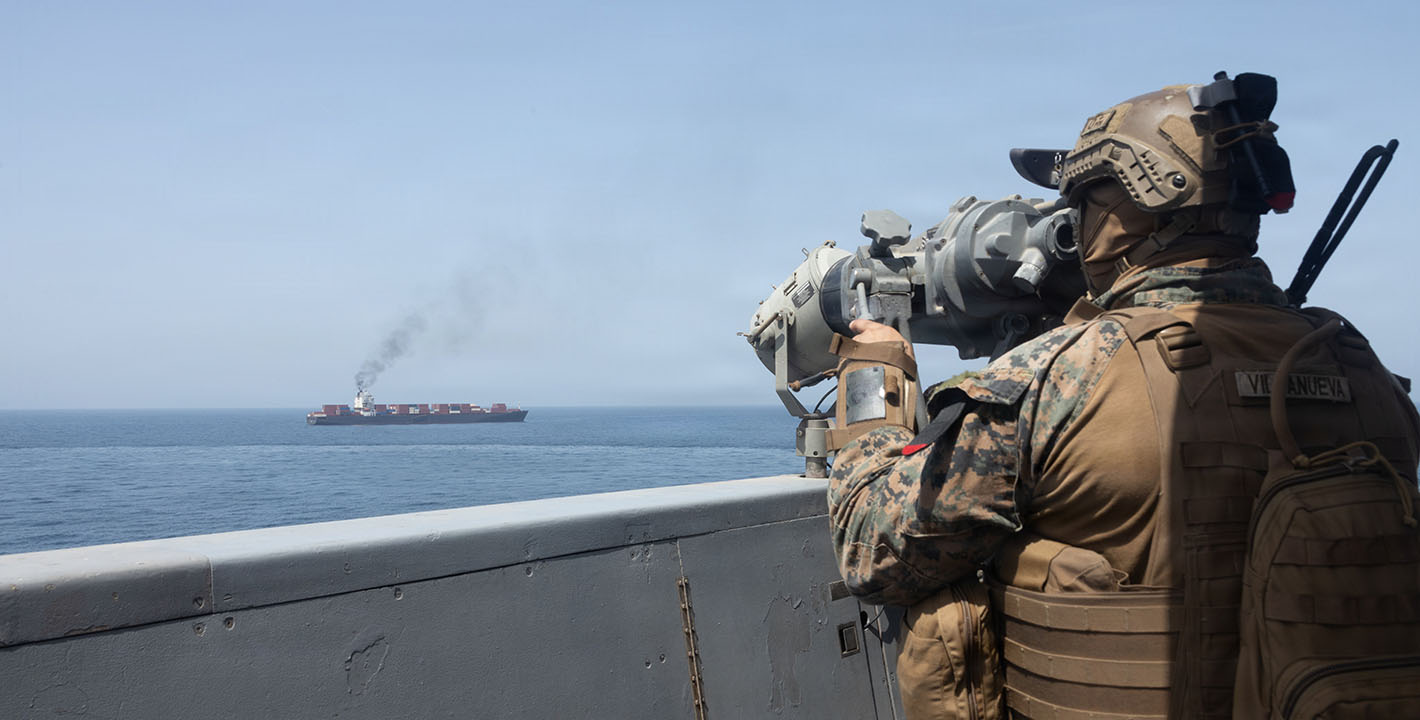
In an interview, Jim Lamson discusses the ongoing regional conflict and sees an unclear picture when it comes to winners and losers.

Michael Young
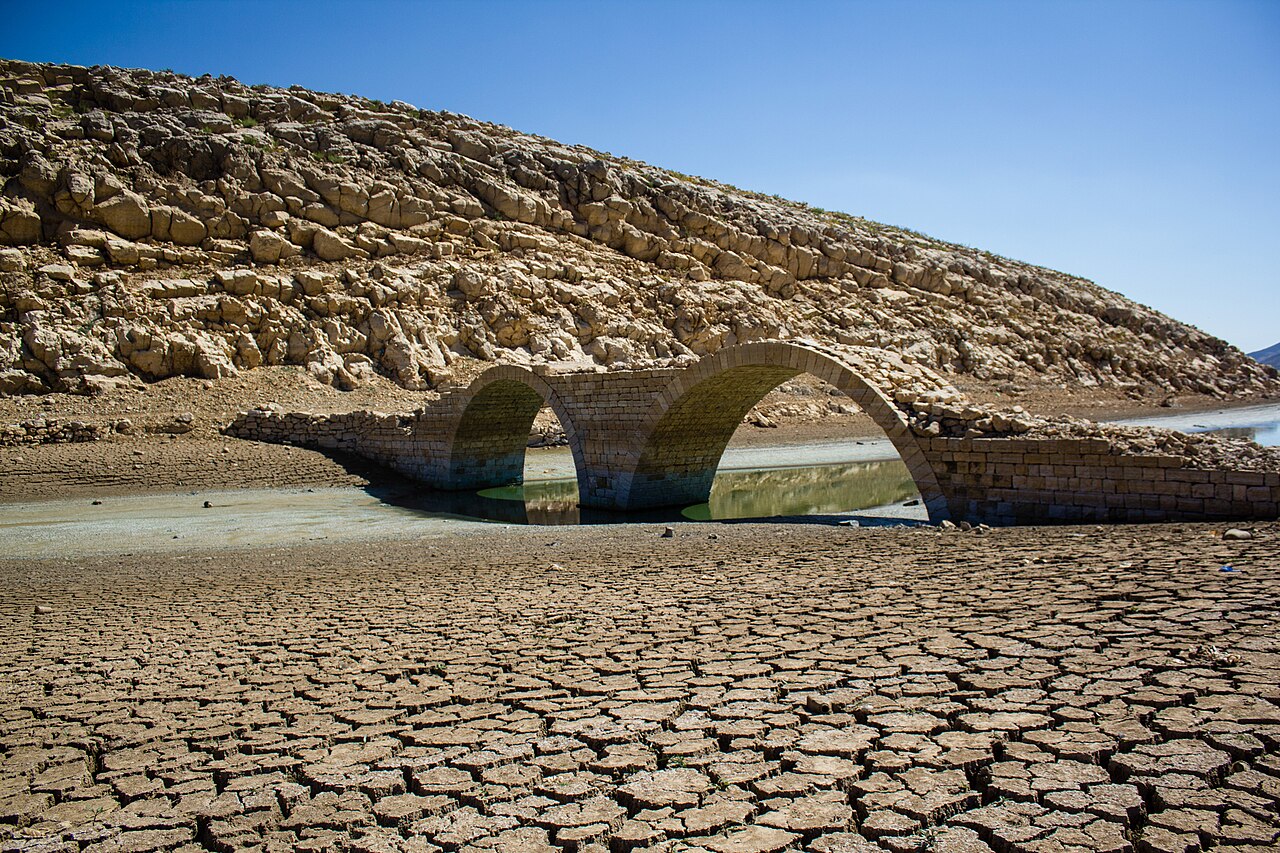
Lebanon’s largest water reservoir is a house of many mansions when it comes to converging failures.
Camille Ammoun
Cairo’s efforts send a message to the United States and the region that it still has a place at the diplomatic table.

Angie Omar
Beirut’s desire to break free from Iranian hegemony may push it into a situation where it has to accept Israel’s hegemony.
Michael Young
Spot analysis from Carnegie scholars on events relating to the Middle East and North Africa.
Michael Young